

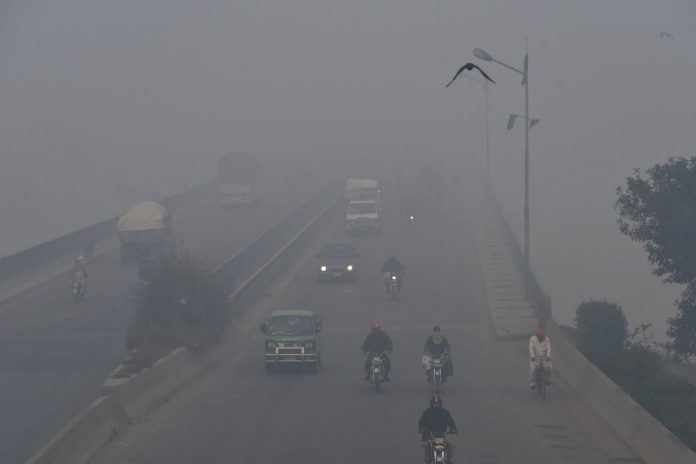
Karachi is facing a severe air pollution crisis, with air quality remaining dangerously high across most parts of the city. Data from the US AQI shows that many neighborhoods are experiencing conditions classified as “Unhealthy” or worse.
North Nazimabad and Gulshan-e-Iqbal are currently the most affected areas, recording AQI levels of 178 and 186, respectively.
These pollution levels pose serious health risks for people of all ages. Other localities are also suffering, with Orangi Town reporting an AQI of 172 and Malir at 167.
There is little chance of immediate relief. Weather forecasts indicate that polluted air will remain trapped over the city for at least the next three days, and cleaner conditions are unlikely before next week.
Authorities have advised children, elderly citizens, and people with health issues to stay indoors and avoid unnecessary outdoor activity.
Even areas that usually enjoy relatively cleaner air are not spared. Clifton recorded an AQI of 141, which still falls under “Unhealthy” conditions, showing that the pollution problem has spread across the entire city.
The main pollutant affecting Karachi’s air is fine particulate matter known as PM2.5. These tiny particles can penetrate deep into the lungs and bloodstream, increasing the risk of respiratory and heart-related illnesses for millions of residents.
Air quality is measured using the Air Quality Index (AQI), which is divided into several categories. An AQI between 0 and 50 is considered good and poses little to no health risk.
Levels between 51 and 100 are classified as moderate and may affect people who are especially sensitive to air pollution. An AQI of 101 to 150 is labeled as unhealthy for sensitive groups, including those with asthma or other breathing conditions.
When AQI levels rise to between 151 and 200, the air is considered unhealthy for everyone, with greater risks for vulnerable groups.
Levels ranging from 201 to 300 are described as very unhealthy and signal emergency health conditions, while AQI readings above 300 are considered hazardous and pose serious health dangers to the entire population.