

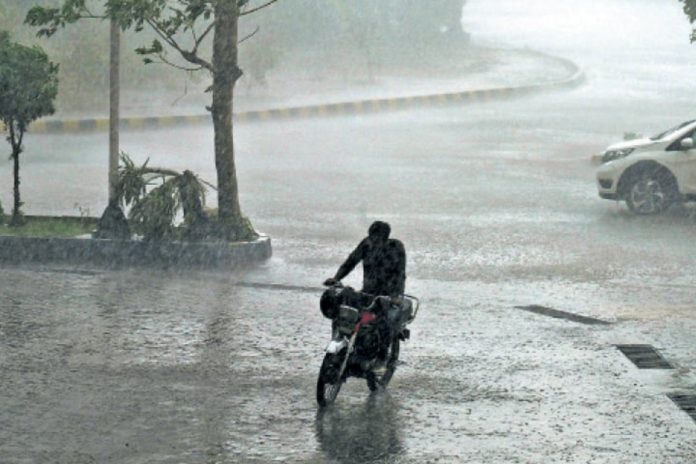
A new spell of severe weather is expected to affect Pakistan as the Pakistan Meteorological Department (PMD) has forecast widespread rain, windstorms, thunderstorms, and hail in several parts of the country from April 5 to April 9. The system is being caused by a strong western disturbance entering the region.
According to the latest advisory, the weather system will first reach Balochistan on the night of April 5. Areas such as Quetta, Chaman, Ziarat, and Dalbandin are likely to receive rain, strong winds, thunderstorms, and occasional heavy downpours until April 7. Coastal areas including Gwadar, Pasni, and Ormara are also expected to get rain on April 6.
In Khyber Pakhtunkhwa, rain and thunderstorms are expected from April 6 to April 9. Snowfall is also likely in mountainous areas such as Chitral, Swat, and Kohistan.
The PMD has warned that some areas may experience heavy rain and hailstorms on April 7 and 8, which could lead to disruptions.
Read Also: More rain, thunderstorms expected in Karachi and Sindh
Punjab and Islamabad are also expected to receive rain, strong winds, and thunderstorms from the evening of April 6 through April 9. Cities like Lahore, Rawalpindi, Faisalabad, and Sialkot may see isolated heavy showers and hail, especially on April 7 and 8.
In Sindh, areas including Sukkur, Larkana, and Jacobabad are likely to receive scattered rain and thunderstorms on April 6. Karachi, Hyderabad, and nearby districts may experience light to moderate rain, with a chance of occasional hail.
Northern regions including Gilgit-Baltistan and Azad Kashmir, are expected to receive moderate to heavy rain, along with thunderstorms and snowfall in higher areas from the night of April 5 until April 9.
The PMD has cautioned that heavy rainfall could cause landslides in vulnerable mountainous areas of upper Khyber Pakhtunkhwa, Gilgit-Baltistan, and Azad Kashmir. There is also a risk of urban flooding and travel disruptions in low-lying areas.
Authorities have advised residents, tourists, and commuters to stay alert, particularly in mountainous and flood-prone regions, as the weather system may affect daily life and road access across the country.