

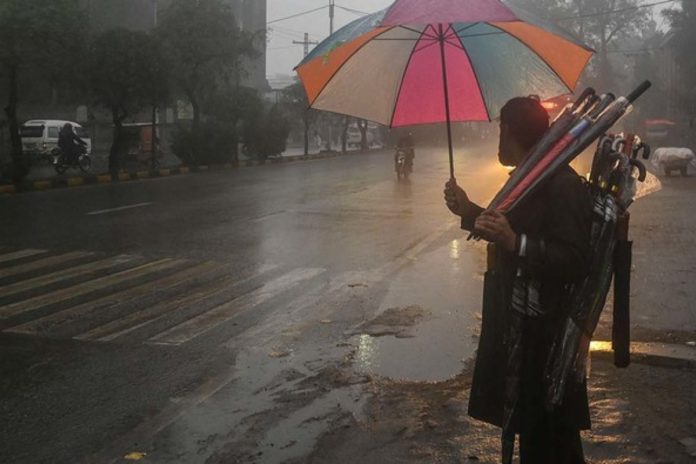
KARACHI: After several days of cloudy skies, Karachiites woke up to a pleasant Sunday morning as light rain fell across parts of the city during the early hours.
Light showers were recorded in areas such as Malir, near the airport, Gulistan-e-Jauhar, Shah Faisal, North Karachi, Surjani Town, Gulshan-e-Maymar, II Chundrigar Road, Saddar, Burns Road, and other parts of the city.
University Road saw the highest rainfall at 2.3 millimetres, followed by 2mm at the airport, PAF Base Faisal, and Gulshan-e-Hadeed.
Rainfall in Korangi and Jinnah Terminal measured 1.4mm, while Keamari and Surjani Town recorded only 0.2mm.
The Pakistan Meteorological Department (PMD) has predicted more rain, ranging from moderate to heavy, with chances of thunderstorms, while temperatures are expected to remain between 32 and 34 degrees Celsius.
Another monsoon system is likely to reach Sindh towards the end of July, according to the Met Office.
In response, the Sindh government cancelled scheduled holidays for local government staff and put emergency services on alert.
“Local government holidays were cancelled and arrangements had been made to ensure immediate drainage of rainwater in vulnerable parts of the city,” said Sindh Senior Minister Sharjeel Inam Memon.
Weather experts said the current rain system was located over southwestern Uttar Pradesh in India and was moving towards Rajasthan.
If it continues on this path, parts of Sindh, including Karachi, could start experiencing heavier rainfall from Friday night onward.
While Karachi is seeing only moderate rainfall at the moment, weather officials are closely tracking the system’s path to assess its impact on southern Pakistan.
Elsewhere, monsoon rains have caused severe damage across the country. According to the National Disaster Management Authority (NDMA), at least 202 people, including 96 children, have lost their lives in various incidents linked to the rain.
Punjab has suffered the most with 123 deaths, followed by 40 in Khyber Pakhtunkhwa, 21 in Sindh, 16 in Balochistan, and one each in Islamabad and Azad Jammu and Kashmir.
Most fatalities occurred due to house collapses, flash floods, electrocution, and lightning. The rains have also injured over 560 people, including 182 children.