

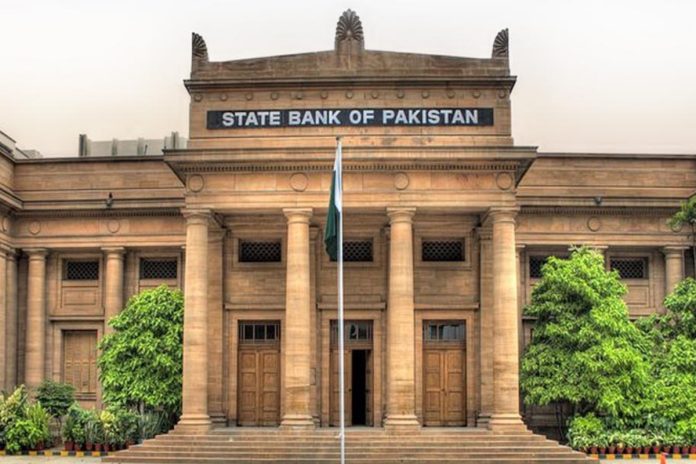
The State Bank of Pakistan announced on Monday that its Monetary Policy Committee has decided to keep the policy rate unchanged at 10.5 percent following its meeting held on January 26 2025.
The central bank had earlier reduced the interest rate by 50 basis points in December 2025. The Committee noted that headline inflation stood at 5.6 percent on a year on year basis in December which was in line with expectations.
However core inflation has remained comparatively high at around 7.4 percent over recent months. At the same time recent economic indicators including large scale manufacturing data suggest that economic activity is picking up faster than expected particularly in sectors driven by domestic demand.
The Committee observed that the trade deficit has widened mainly due to a sharp rise in imports and a decline in exports. Despite this, the current account deficit has stayed under control, supported by strong workers’ remittances and stable global commodity prices.
Taking these factors into account the MPC said the outlook for inflation and the current account remains broadly unchanged while prospects for economic growth have improved notably. On this basis the Committee considered it appropriate to maintain the policy rate at its current level to preserve price stability and support steady economic expansion.
Since the previous meeting several key developments were noted. Provisional data showed real GDP growth of 3.7 percent year on year in the first quarter of FY26 led mainly by industry and agriculture. Consumer and business confidence also improved while inflation expectations eased.
Foreign exchange reserves crossed the end December target reaching 16.1 billion dollars by January 16 largely due to SBP purchases in the interbank market. Meanwhile, FBR revenue growth slowed to 7.3 percent in December missing the target. On the global front the IMF slightly raised its growth forecast for 2026 but flagged risks linked to trade uncertainty volatile commodity prices and geopolitical tensions.
The Committee assessed that the real policy rate remains sufficiently positive to help bring inflation within the medium term target range of 5 to 7 percent. It also stressed the importance of coordination between monetary and fiscal policies along with structural reforms aimed at boosting productivity exports and long term growth.
On the real sector the economy showed a clear recovery with GDP growth of 3.7 percent in the first quarter compared to 1.6 percent a year earlier. Recent indicators point to continued momentum in the second quarter. Auto sales cement dispatches petroleum sales fertilizer offtake and imports of machinery and intermediate goods all posted growth reflecting strong domestic demand.
Large scale manufacturing recorded year on year growth of 8 percent in October and 10.4 percent in November pushing cumulative growth to 6 percent during July to November FY26. In agriculture early data and satellite imagery indicate encouraging prospects for the wheat crop which is expected to support the services sector as well.
As a result the SBP has revised its growth outlook upward projecting real GDP growth between 3.75 and 4.75 percent in FY26 with further strengthening expected in FY27 supported by earlier rate cuts and improved macroeconomic stability.
On the external front the current account posted a deficit of 244 million dollars in December bringing the first half deficit to 1.2 billion dollars.
This was driven by a wider trade gap caused by higher imports and weaker exports particularly a sharp fall in food exports such as rice while higher value textile exports remained stable. Growth in remittances and ICT services exports helped limit the overall impact and allowed the SBP to build reserves.
Looking ahead the SBP expects the current account deficit to remain within 0 to 1 percent of GDP in FY26 supported by remittances and favorable commodity prices. Foreign exchange reserves are projected to exceed 18 billion dollars by June 2026 and improve further in FY27 though risks from global trade disruptions and geopolitical uncertainty remain.
On the fiscal side FBR revenues grew by 9.5 percent in the first half of FY26 well below last year’s pace resulting in a revenue shortfall of 329 billion rupees. While expenditure control helped improve the overall fiscal balance achieving the annual primary surplus target remains challenging.
The Committee emphasized that lasting growth depends on maintaining fiscal discipline expanding the tax base and reforming loss making state owned enterprises.
In terms of money and credit broad money growth rose to 16.3 percent by early January driven by higher private sector lending and government borrowing.
Private sector credit increased by 578 billion rupees with major demand coming from textiles trade and chemicals while consumer financing also expanded. To further support credit growth the SBP announced a reduction in the average cash reserve requirement for banks from 6 percent to 5 percent.
On inflation headline inflation eased to 5.6 percent in December due to lower food prices despite higher wheat costs while energy inflation increased as earlier tariff base effects faded. Core inflation remained steady but inflation expectations continued to decline.
The Committee expects inflation to stay within the 5 to 7 percent range in FY26 and FY27 although risks remain from commodity prices energy adjustments and stronger than expected domestic demand.