

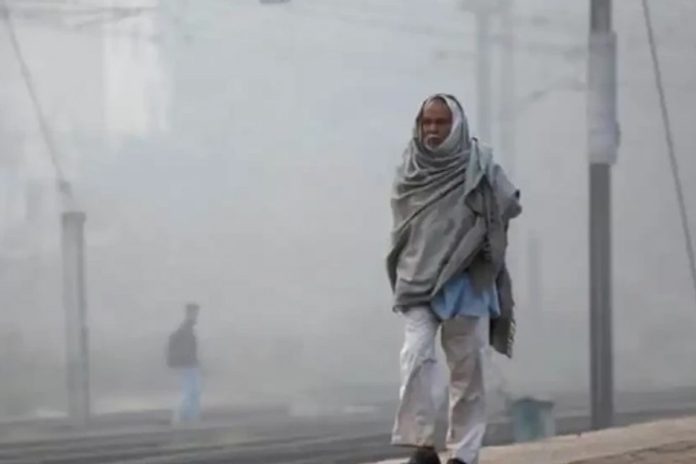
The Pakistan Meteorological Department (PMD) has dismissed reports suggesting that the country will face its coldest winter this year, saying there is no scientific evidence to support such claims.
The department also predicted that the upcoming winter season will bring less rainfall than usual.
In its statement, the PMD clarified: “The country can expect some winter waves with minor intensity due to the western wind, but there are no possibilities of an intensely cold winter.
This year, the country is expecting less rainfall between December and February.” The clarification came after earlier claims that Pakistan was likely to experience an unusually harsh winter.
Rejecting these predictions, the Met Office emphasized that no scientific data support the idea of an extreme cold spell this year.
Previously, the Intersector Coordination Group (ISCG) had forecast one of the coldest winters in decades, linking it to the La Niña weather pattern. However, the PMD has disagreed, saying there is no evidence to confirm this.
A recent report on Pakistan’s monsoon floods warned that La Niña could still cause colder-than-usual temperatures across various regions, posing additional challenges for flood-hit communities, especially in Khyber Pakhtunkhwa (KP) and Gilgit Baltistan (GB).
La Niña occurs when sea surface temperatures in the Pacific Ocean drop unusually low, disrupting global weather systems and often triggering extreme temperature changes.
According to the UN-OCHA’s October forecast, slightly negative phases of both the El Niño Southern Oscillation and the Indian Ocean Dipole are expected to affect Pakistan’s rainfall.
The report added, “Northern Punjab, Khyber Pakhtunkhwa, Azad Jammu and Kashmir, and Gilgit Baltistan may experience below-normal rainfall, while southern regions, including Sindh, Balochistan, and southern Punjab, are likely to receive near-normal precipitation.”
It also warned of possible impacts, including interruptions in Kharif crop harvesting due to isolated storms, higher risks of dengue outbreaks from stagnant water, potential glacial lake outburst floods in northern areas, lower river inflows affecting irrigation, increased smog in plains, and reduced fodder for livestock due to higher temperatures.