

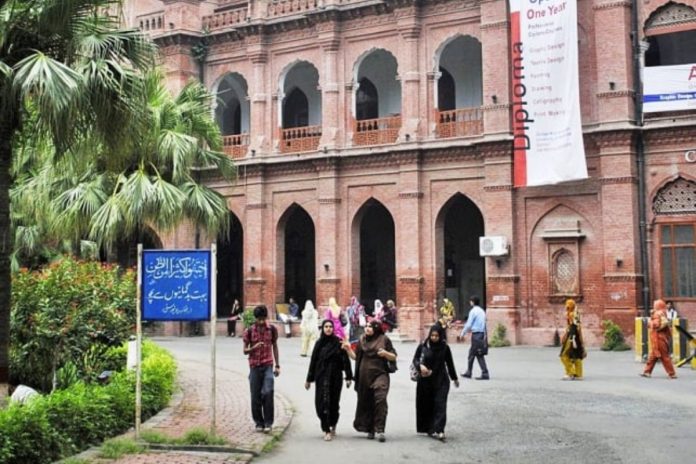
Public sector universities in Punjab are witnessing a sharp drop in student admissions this year, raising serious concerns among educationists and policymakers about the state of higher learning in the province.
Data from the Punjab Higher Education Department shows a 20% to 30% fall in enrollments for undergraduate, MPhil, and PhD programs in many institutions.
Major universities such as Punjab University Lahore, Government College University Faisalabad, and Bahauddin Zakariya University Multan have reported lower admissions than expected, while smaller universities in districts like Dera Ghazi Khan, Sahiwal, and Narowal are finding it even harder to fill seats in popular fields.
Academics attribute the decline to rising living costs, outdated academic programs, and the growing mismatch between university degrees and job market needs.
“This is a worrying trend that points to a deeper crisis in our education system,” said Prof. Dr. Munawar Sabir, former chairman of Punjab University’s Geography Department.
“For many families, even public universities have become unaffordable due to hostel costs, transportation, books, and other expenses.”
Parents from rural and low-income urban areas say inflation has made higher education nearly impossible to afford.
Shamsa Bibi, from a village near Narowal, shared that her son had to abandon his university plans despite good grades in intermediate exams. “He is now working in a factory because we can’t manage the expenses,” she said.
Experts also highlight that many degree programs have not been updated in decades. “Several universities are still teaching in formats that haven’t changed in two decades,” said Prof. Dr. Muhammad Arshad Ali.
“The job market has evolved, but our degrees haven’t. Without employable skills, students don’t see the point of investing years in university.”
This shift has led more young people towards skill-based diplomas, short professional courses, and online certifications, which they see as quicker paths to employment.
The rise of freelancing and gig work has also encouraged students to prioritize learning digital skills over pursuing traditional degrees.
While some universities have started offering programs in IT, data science, and business innovation, these initiatives are inconsistent and lack province-wide adoption.
Career counseling services are limited, and few universities have strong industry links to help students secure relevant jobs.
The steep fall in MPhil and PhD enrollments is especially troubling for faculty members, who warn it could weaken research and academic growth in Punjab.
Education experts are calling for urgent government action, suggesting measures such as subsidized or free student transport, more scholarships for low-income families, lower entry test fees, easier online admission procedures, and a complete curriculum overhaul to meet industry demands.