
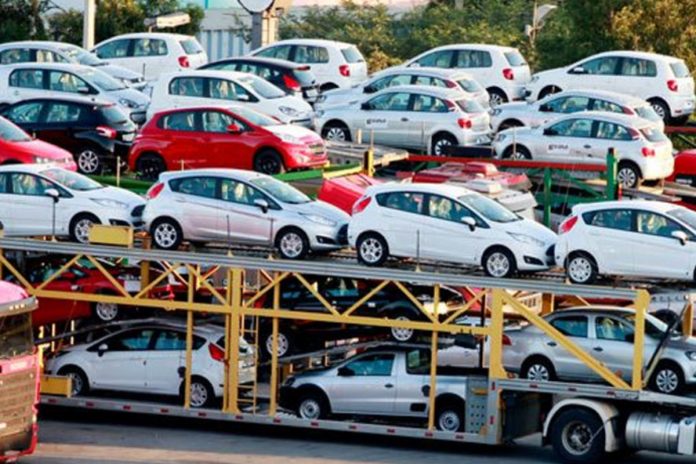
The government has announced that accidental or low-quality used cars will no longer be allowed into Pakistan, while a 40% tariff will be applied on commercial imports of used vehicles starting next month, a move aimed at shielding the local auto industry.
This decision means consumers should not expect any immediate drop in car prices despite trade liberalisation, as local assemblers argue that high taxation, ranging from 30% to 61% of retail prices, already makes vehicles costly in Pakistan.
The policy was unveiled on Monday during a joint session of the Senate Standing Committees on Finance and Industry.
Joint Secretary for Trade Policy Mohammad Ashfaq informed lawmakers that under agreements with the International Monetary Fund (IMF), the government will impose tariff protection equal to 40% of the price of new cars.
He added that the government has not yet decided whether to retain current import schemes, including transfer of residence, baggage, and gift options, once commercial imports begin.
At present, commercial imports are banned, and nearly a quarter of demand is met through these schemes, which often bring in slightly accidental vehicles still preferred by many over local models.
As part of its $7 billion IMF bailout, Pakistan has committed to gradually opening the auto sector. From September, commercial imports of used cars up to five years old will be permitted, with all restrictions on age and quality set to end by July next year.
Over four years, the additional 40% tariff will be reduced to zero, eventually allowing imports of six- to eight-year-old cars, though officials say standards will be introduced to address environmental concerns.
Pakistan is also required to cut its overall tariff regime from an average of 20.2% to 9.7% within five years, a 52% reduction. In FY26, the average tariff will drop to 15.7%, with customs duty set at 11.2%, additional customs duty at 1.8%, and regulatory duty at 2.7%.
Additional customs duties will be phased out in four years, regulatory duties in five, and exemptions eliminated in the same period. The tariff structure will be simplified to four slabs, with a maximum rate of 15%.
The Pakistan Automotive Manufacturers Association (PAMA) and the Pakistan Association of Automotive Parts and Accessories Manufacturers (PAAPAM) are lobbying against these IMF-driven reforms, warning that liberalisation could hurt the local industry.
Currently, the auto sector operates under the protection of up to 35% customs duty, which will begin phasing out from July 1, 2026.
Analysts say the new policy reflects the government’s balancing act between IMF commitments and pressure from the local auto lobby, leaving consumers with little relief for now as accidental car imports remain banned and a hefty 40% tariff keeps prices high.