

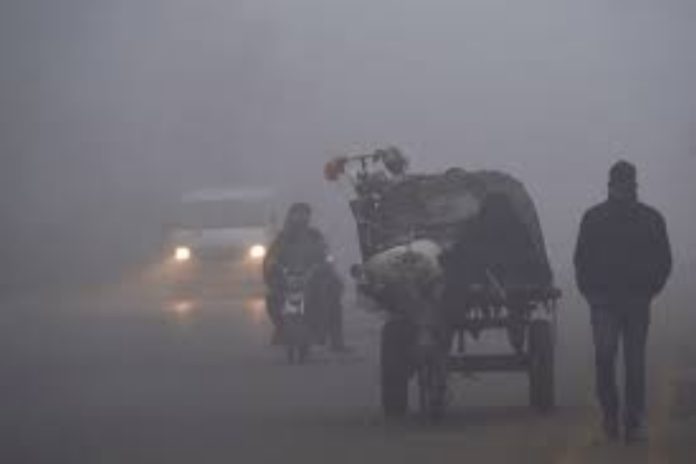
Karachi’s air quality has worsened today compared to yesterday, with several areas of the city experiencing high pollution levels.
While some parts remain relatively safe, other areas have seen a sharp rise in harmful particulate matter (PM2.5), posing health risks to residents.
Data collected today at 5:50 pm shows University Road at 113 and Gulistan-e-Johar at 110, falling into the “Unhealthy for Sensitive Groups” category. Shahra-e-Faisal recorded 120, also in the same category. Mauripur saw 93, and DHA Phase 5 remained relatively better at 76, in the “Moderate” zone.
The three-day forecast predicts mixed air quality across Karachi, with some relief expected in areas currently facing high pollution levels.
This news report is produced in collaboration with Climate Action Center Karachi.
Karachi Air Quality
Air quality is measured using the Air Quality Index (AQI), which has the following categories:
AQI 0–50: Good
The air quality is considered excellent, with minimal or no risk to public health. There are no necessary precautions for the general population.
AQI 51–100: Moderate
Air quality is generally acceptable, but a small number of unusually sensitive individuals may face slight health concerns. Active children, adults, and people with respiratory conditions like asthma should consider limiting prolonged outdoor activity.
AQI 101–150: Unhealthy for Sensitive Groups
Sensitive individuals, such as those with asthma or other respiratory issues, may begin to experience health effects, although the general population is unlikely to be affected. It is advised that active children, adults, and those with respiratory conditions limit extended outdoor exertion.
AQI 151–200: Unhealthy
Health effects may begin to affect everyone, with sensitive groups potentially experiencing more serious symptoms. Active children and adults, and people with respiratory illnesses, should avoid prolonged outdoor activity, while others, especially children, should reduce outdoor exertion.
AQI 201–300: Very Unhealthy
This range signals emergency-level health warnings. The entire population is more likely to experience adverse health effects. Those with respiratory conditions and active individuals should avoid all outdoor activity, while everyone else, particularly children, should limit time spent outdoors.
AQI 300+: Hazardous
Air quality is extremely poor, posing a serious risk to health for everyone. A health alert is in effect, and all outdoor exertion should be avoided by the entire population.