

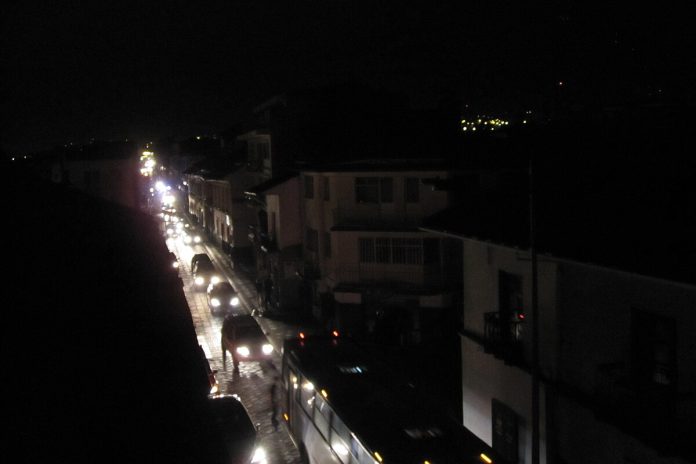
ISLAMABAD: Federal Minister for Energy Owais Leghari has said that electricity load shedding across the country will start easing from tonight, bringing partial relief to consumers facing long hours of outages.
Addressing a press conference, he apologised for the inconvenience caused to the public and acknowledged the difficulties arising from the ongoing power shortfall.
He said the government is working to improve the electricity supply situation and added that a noticeable reduction in load shedding is expected from tonight as conditions gradually improve.
The minister clarified that no load shedding is being carried out in Hyderabad or in areas supplied by K-Electric. He added that K-Electric is currently receiving a record 2,100 megawatts from the national grid, while the country continues to face an overall shortage of around 4,000 megawatts.
Read Also: K-P faces extra load shedding due to supply gap: PESCO
He said the power crisis is linked to several factors, including a decline in hydropower generation and issues in gas supply.
According to him, hydropower output has dropped by around 1,600 megawatts, while problems in LNG supply have created a shortfall of over 3,000 megawatts. He also pointed to regional tensions as a factor affecting fuel availability.
He further said electricity demand in April has ranged between 9,000 and 20,000 megawatts, and load shedding increases when demand crosses about 16,500 megawatts. He described the situation as temporary and said it should improve once hydropower production increases and fuel supply stabilises.
Owais Leghari added that around 1,400 megawatts of electricity is currently being generated through furnace oil.
However, he warned that increased reliance on furnace oil may lead to higher fuel cost adjustments, which could raise electricity prices by up to Rs1.30 per unit.
He also confirmed that load shedding is being implemented in both urban and rural areas, including the industrial sector.
Responding to concerns about legality, he said the current “economic load shedding” would eventually be formalised under policy decisions.
He concluded that resolving the electricity crisis fully depends on the restoration of LNG supply, adding that the situation is temporary and linked to external supply issues and seasonal demand pressures.