

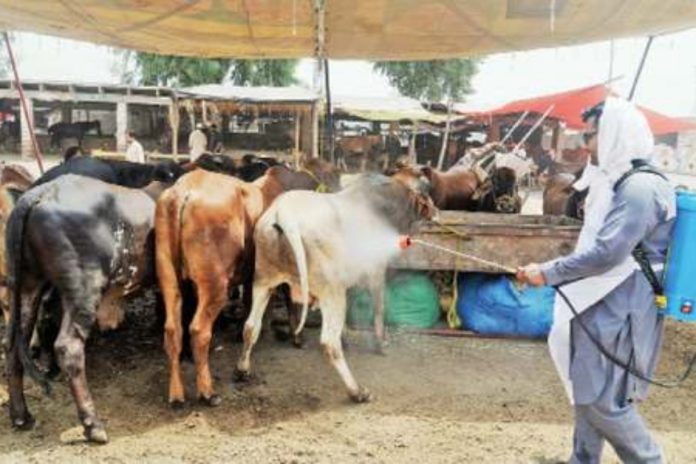
The National Institute of Health (NIH) has issued a nationwide advisory warning of a higher risk of Crimean-Congo hemorrhagic fever (CCHF) ahead of Eid-ul-Adha due to increased human-animal contact.
The institute reported 82 confirmed cases and 20 deaths in 2025, bringing the case fatality rate above 24 percent. This marks a rise from 61 cases in 2024, and four cases have already been reported this year.
The advisory noted that CCHF, a tick-borne viral disease, spreads through bites from infected ticks or contact with the blood and tissues of infected animals, especially during slaughter. Human-to-human transmission is also possible through exposure to infected blood and bodily fluids.
NIH warned that high-risk groups include livestock handlers, butchers, veterinarians and healthcare workers. Hospital-acquired infections remain a concern due to poor infection control practices.
Read Also: Expected date for Eid ul Adha 2026 announced
It added that symptoms include sudden fever, headache, muscle pain and, in severe cases, bleeding and organ complications.
The advisory called for preventive measures such as using protective clothing, controlling ticks in livestock, safe handling of animals and strict infection control in healthcare settings. Citizens were urged to maintain increased vigilance during the Eid period.