

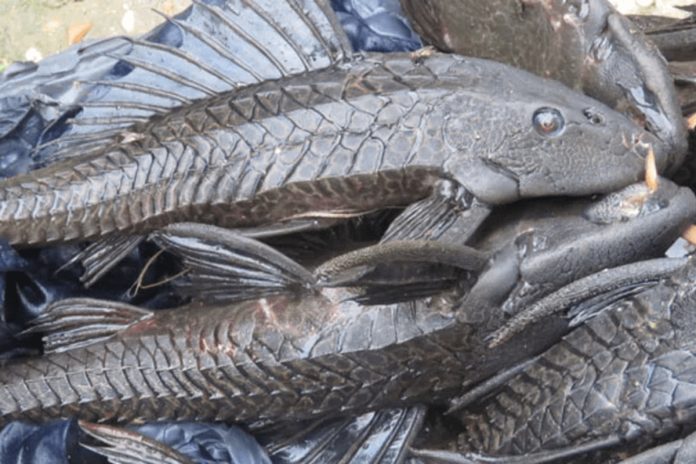
Recent sightings of the Amazon sailfin catfish in Pakistan have raised alarms among environmentalists, who warn that the invasive species could seriously harm native fish populations and threaten the local fishing economy.
WWF Pakistan reported that the catfish was recently seen at Karachi Fish Harbor, and another was recovered from a reservoir near Sukkur. Originally from Latin America, the species has accidentally entered Pakistan’s rivers and reservoirs and is now spreading rapidly across Sindh and southern Punjab.
The sailfin catfish, known for its strong, armored body covered in bony plates, competes aggressively with native fish for food and habitat. It also preys on smaller species, spreads diseases, and disrupts the balance of local aquatic ecosystems.
“This species, along with 25 other non-native fish that have become invasive over the past three decades, is displacing indigenous fish, reducing biodiversity, and threatening the livelihoods of local fishermen,” WWF Pakistan said.
Past invasions, such as tilapia in lakes like Manchar and Keenjhar, caused major declines in fish production, a trend experts fear could worsen with the continued spread of sailfin catfish.
WWF Pakistan also confirmed the Red-Bellied Pacu, another invasive catfish, has been found in the Chenab River and Kandhkot area. Authorities note that once such invasive species establish themselves, complete removal becomes extremely difficult.
WWF Pakistan has called for strict monitoring and quarantine measures for imported non-native fish, including the Amazon sailfin catfish. The organization urged the Ministry of Climate Change and other relevant authorities to act immediately to prevent further ecological damage.
In recent years, social media promotions of Red-Bellied Pacu seeds and other exotic catfish, including the sailfin catfish, have encouraged their import and farming despite repeated warnings from environmental officials.
Experts warn that continued introduction of these species could put Pakistan’s aquatic biodiversity and the livelihoods of fishing communities at serious risk.