

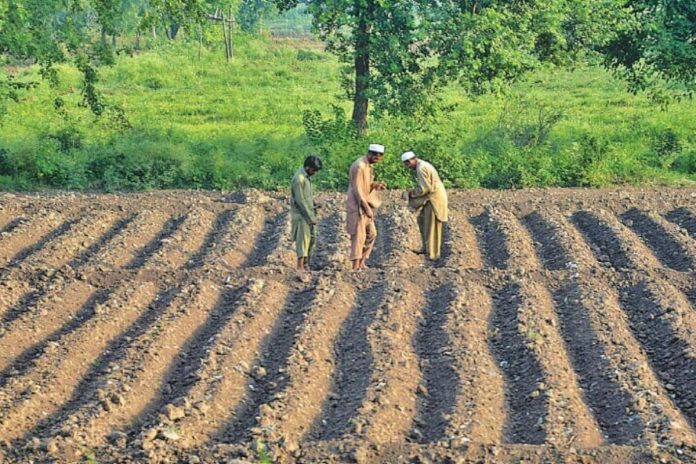
The Punjab government has expanded its Kissan Card initiative across the province to provide greater financial support to farmers and improve access to agricultural resources. More than 832,000 farmers have received Kissan Cards under the program so far.
The scheme is designed to help farmers easily obtain agricultural inputs through formal financing channels. Under the program, farmers have utilized Rs25.4 billion in agricultural loans and purchased inputs worth over Rs100 billion during the wheat season.
For the Kharif season, the government allocated Rs90 billion to ensure farmers could purchase seeds, fertilizers, and other essential farming inputs without delay.
According to officials, the program has delivered encouraging financial results. Out of Rs67 billion due for recovery, farmers have repaid Rs57 billion, resulting in an 86 percent recovery rate from 538,000 farmers.
The wider rollout of the initiative has also enabled nearly 300,000 farmers to access agricultural inputs valued at Rs30 billion.
Punjab Chief Minister Maryam Nawaz said, “The Kissan Card program is transforming agriculture.” She noted that the initiative is helping farmers become financially independent by reducing their reliance on middlemen.
Read Also: Electricity prices may rise by Rs1.72 per unit in Pakistan
She further stated that the government’s goal is to provide dignity, stability, and empowerment to farmers. She also appreciated farmers for making timely repayments and reiterated her commitment to supporting agricultural development across Punjab.
The government believes the program has improved access to formal credit for small and medium-scale farmers. Officials added that timely financial assistance has contributed to higher productivity while lowering dependence on informal borrowing.
They also said efforts are being made to further strengthen the scheme by enhancing transparency and operational efficiency. Continued digital monitoring of loans and input purchases is expected to improve accountability and ensure subsidies reach the right beneficiaries.