


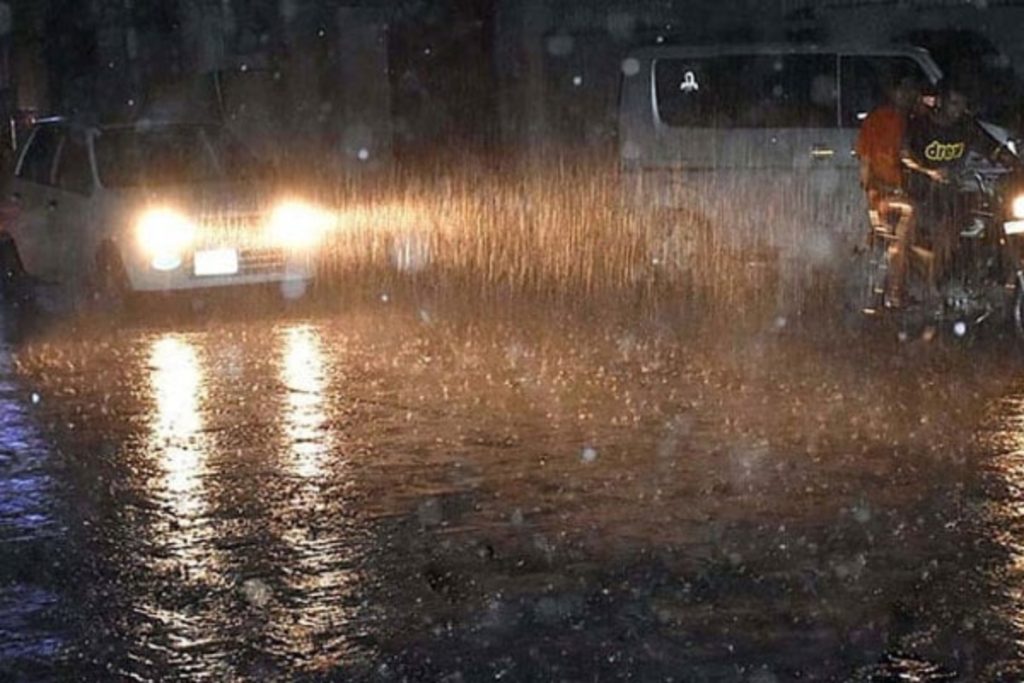
The Pakistan Meteorological Department (PMD) on Tuesday issued a nationwide weather advisory, warning that a fresh spell of monsoon rains from July 29 to August 5 could lead to urban flooding, flash floods and landslides in many parts of the country.
According to the PMD, moisture-laden monsoon winds from the Arabian Sea and the Bay of Bengal are expected to move into the upper and central regions of Pakistan from July 29. A westerly weather system already affecting the northern areas is also likely to strengthen from August 1.
“Under the forecast, Kashmir, Punjab, Islamabad, Khyber-Pakhtunkhwa (K-P), Gilgit-Baltistan (G-B), parts of Balochistan and Sindh are expected to receive widespread rain and thunderstorms, with scattered heavy to very heavy falls in several areas,” it said.
The department warned that heavy rainfall may cause urban flooding in low-lying areas of Islamabad, Rawalpindi, Peshawar, Nowshera, Gujranwala, Gujrat, Sialkot, Lahore, Multan and Faisalabad between July 30 and August 4.
Read Also: Ministry of Defence announces 600+ jobs in Pakistan
“In Sindh, urban flooding is also likely in cities including Hyderabad, Sukkur, Shaheed Benazirabad, Mirpurkhas, Umerkot and Badin from July 31 to August 2,” said the met office.
The PMD also cautioned that landslides could occur in vulnerable areas of upper K-P, Murree, Galiyat, Gilgit-Baltistan and Kashmir. Heavy rainfall may also trigger flash floods in local streams and nullahs across Kashmir, northeastern Punjab, Islamabad, K-P and the hill torrents of Dera Ghazi Khan and northeastern Balochistan.
Meanwhile, the Punjab Disaster Management Authority (PDMA) issued a province-wide advisory, warning that the fourth spell of monsoon rains will affect most districts of Punjab from July 29 to August 5. The authority said heavy rainfall could result in urban flooding, flash floods and landslides in vulnerable areas.
“Heavy rainfall is expected in Kasur, Sheikhupura, Nankana Sahib, Faisalabad, Jhang, Toba Tek Singh, Chiniot, Khushab, Mianwali, Layyah, Bhakkar, Noorpur Thal, Sargodha, Sahiwal, Okara and Pakpattan from July 29 to August 4, while Bahawalpur, Bahawalnagar, Rahim Yar Khan, Khanewal, Multan, Vehari, Lodhran, Muzaffargarh, Kot Addu, Dera Ghazi Khan and Rajanpur are likely to receive rain between July 31 and August 3,” the authority said.
The PDMA added that heavy showers are also expected in Rawalpindi, Murree, Galiyat, Attock, Chakwal, Jhelum, Mandi Bahauddin, Gujrat, Gujranwala, Hafizabad, Wazirabad, Sialkot and Narowal.
The advisory warned that Lahore, Rawalpindi, Gujranwala, Gujrat, Sialkot, Faisalabad and Multan could experience urban flooding, while Murree, Galiyat and other hilly areas remain at risk of landslides.
PDMA Director General Umar Mela directed all commissioners and deputy commissioners across Punjab to stay on high alert and ensure emergency preparedness in line with the instructions of Punjab Chief Minister Maryam Nawaz.
Read Also: LPG prices continue to rise across Pakistan
“Major cities should remain prepared for possible urban flooding caused by monsoon rains,” Mela said.
He also warned that rainfall in the upper catchment areas could increase water levels in eastern rivers and nearby streams, raising the risk of flooding.
“Expected rainfall in the upper catchment areas may increase flows in the eastern rivers and adjoining streams, while seasonal nullahs are also at risk of flash flooding,” he said.
According to Mela, the Health Department, Irrigation Department, Communications and Works Department, Local Government Department and Livestock Department have all been placed on alert.
District administrations have been instructed to keep District Emergency Operation Centres (DEOCs) operational round the clock, coordinate with all relevant departments, issue safety advisories through electronic and social media, complete contingency planning, clear drains, position heavy machinery in flood-prone areas, deploy additional staff in high-risk districts, keep Rescue 1122 teams ready and submit regular situation reports.
He further warned that heavy rain, thunderstorms and lightning could damage weak structures, including solar panels, electric poles and billboards. Tourists and travellers have been advised to remain cautious, while farmers have been urged to protect their crops and livestock during the forecast period.
“Citizens are requested to adopt precautionary measures during adverse weather conditions. People should not stay in dilapidated or mud-built houses. A large number of monsoon-related fatalities are reported every year due to the collapse of weak structures,” he added.
Mela also advised parents to keep children away from waterlogged areas, electric wires and utility poles. He urged the public to avoid standing in open spaces during thunderstorms.
In case of an emergency, citizens have been asked to contact the PDMA helpline 1129.