


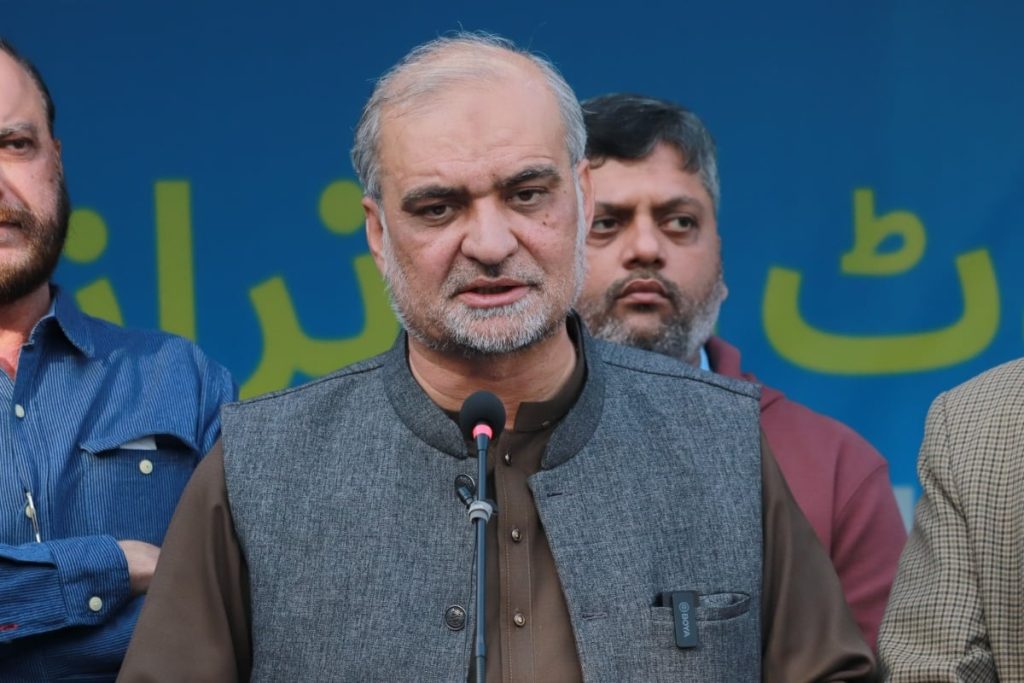
Hafiz Naeem ur Rehman on Thursday demanded an immediate reduction in petroleum prices and announced nationwide protests against inflation and the petroleum levy on June 19, warning that sit-ins would be staged across all four provinces if the government’s demands were not met.
Addressing a press conference in Lahore, the Jamaat-e-Islami Pakistan chief welcomed the reported Iran–U.S. ceasefire agreement, describing it as a positive development for the region.
He said Pakistan had played a constructive role in the process and called for stronger cooperation among Pakistan, Saudi Arabia, Iran and Türkiye to promote unity among Muslim countries.
Calling for substantial public relief, Hafiz Naeem demanded that petrol prices be reduced to Rs225 per litre and frozen for the next three years. He also sought the abolition of the petroleum levy, reductions in diesel and electricity prices, and argued that minor cuts of Rs10 or Rs20 per litre would not provide meaningful relief to the public.
Read Also: Sindh CM announces plan for Karachi international financial centre
Criticising the federal budget, he said parliamentarians had received salary increases of 300–500%, while government employees had been offered only a 10% raise.
He also called for the abolition of lawmakers’ development funds, an increase in the minimum wage, income tax exemption for individuals earning up to Rs125,000 per month, and higher allocations for the Employees’ Old-Age Benefits Institution (EOBI) and pensions.
The JI chief further expressed concern over reduced allocations for education and agriculture, criticised the outsourcing of public schools in Punjab, and said neglect of the agricultural sector had led to declining cotton production.
He also urged dialogue to resolve issues in Azad Jammu and Kashmir, called for urgent attention to the issue of Pakistanis reportedly abducted in Somalia, and supported an increase in the defence budget while advocating cuts to administrative expenditures and official privileges to redirect resources towards education, healthcare, employment and public welfare.