


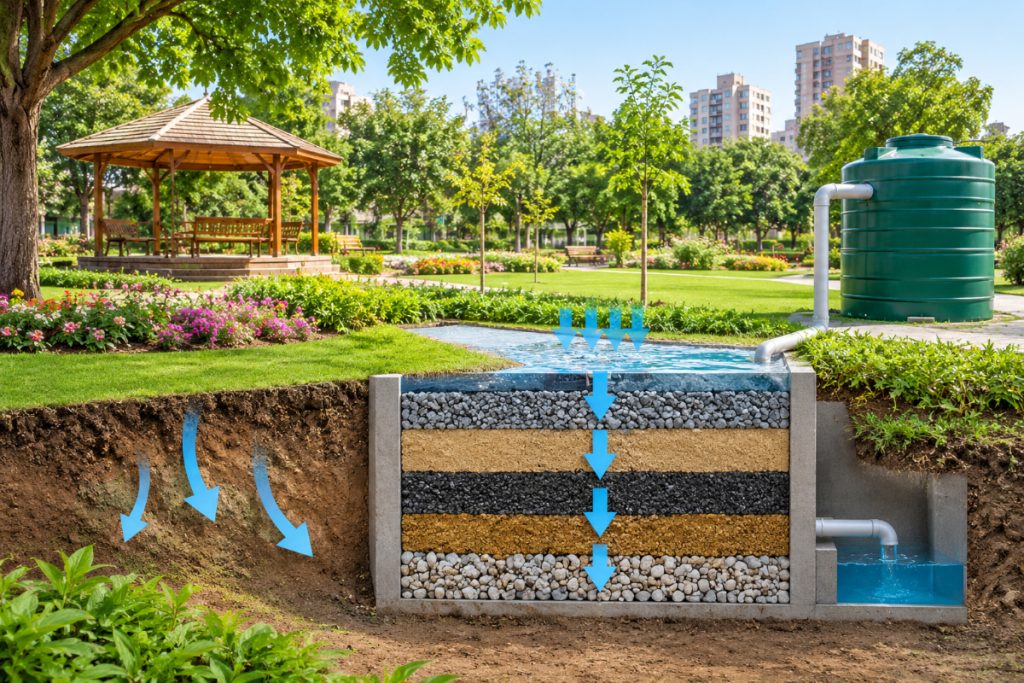
Karachi has launched Pakistan’s first experimental sponge park at Jamali Park in Gulberg Block 2. The project is designed to collect, filter and reuse rainwater to conserve water resources, recharge groundwater and reduce the risk of urban flooding.
The park has been developed through a joint effort by WWF-Pakistan, Gulberg Town Municipal Corporation and private-sector partners. It features a filtration system that collects rainwater along with water from a nearby mosque.
Read Also: Sindh completes 1 million homes for flood-affected families
The collected water passes through several filtration layers, including gravel, sand, silica, activated carbon, biochar and zeolite. After filtration, it is stored underground or in tanks for use in irrigation.
Naim Ashraf Raja, Director of Biodiversity at the Ministry of Climate Change, said such initiatives could help restore underground freshwater reserves and tackle future water shortages.
The park also promotes greenery and biodiversity by providing residents with indigenous plants such as tamarind, almond, peepal and gulmohar trees. Special areas have also been developed to support butterflies and other forms of biodiversity.
Unlike conventional parks, sponge parks are designed to absorb and store rainwater rather than allowing it to flow directly into drainage systems. This helps reduce pressure on urban drains, improve groundwater recharge and minimise flooding risks.
If the project delivers positive results, the same model could be introduced in other parts of Karachi. However, its success will depend on local soil conditions, groundwater quality and regular maintenance.